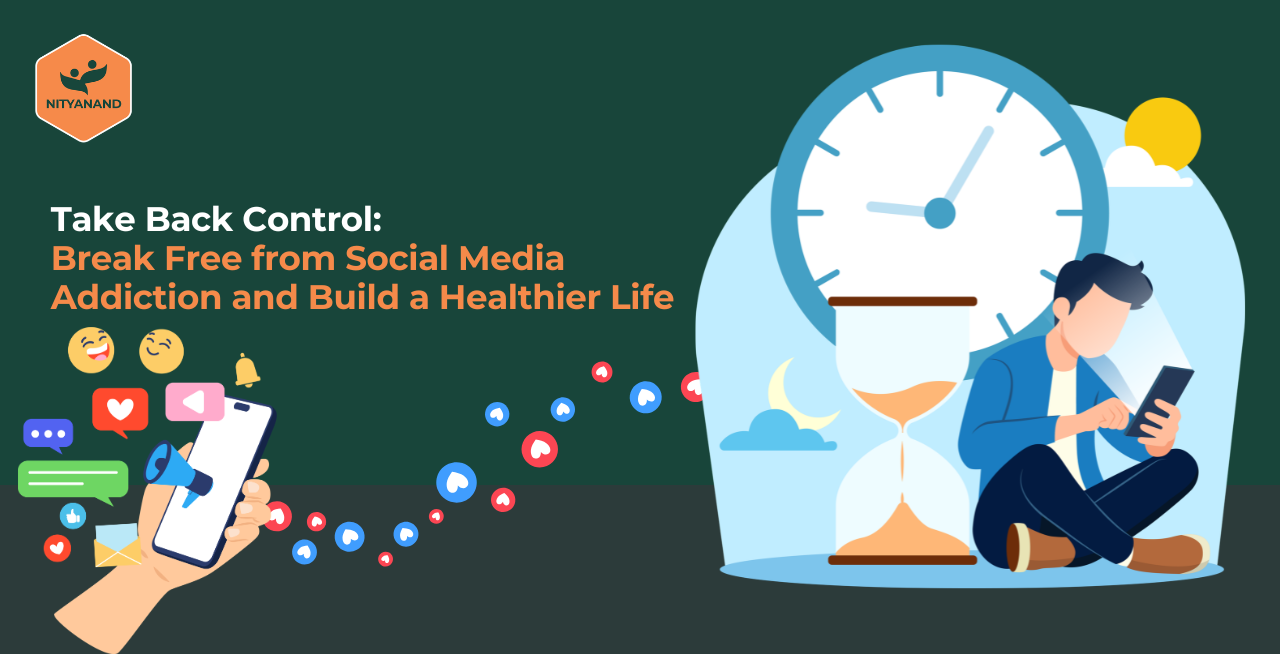



Social media has become part of daily life. It helps people stay connected, follow news, learn new things, and relax. But when scrolling becomes difficult to control, it can slowly affect sleep, focus, mood, relationships, studies, work, and emotional well-being.
Many people realise there is a problem only when they repeatedly open apps without thinking, lose track of time, compare themselves with others, or feel anxious when they cannot check notifications. If you are wondering how to break addiction to social media, the first step is to understand that it is not just about willpower. It is about recognising the habit loop and replacing it with healthier routines.
Social media addiction is a compulsive pattern of using platforms such as Instagram, Facebook, YouTube, X, Snapchat, or short-video apps even when they are affecting daily life.
It may involve:
Social media addiction is often linked to instant rewards. Every like, comment, message, or notification can create a small sense of validation. Over time, the brain starts seeking that reward repeatedly.
Social media platforms are designed to keep people engaged. Endless scrolling, short videos, notifications, trending content, and personalised feeds make it easy to stay online longer than intended.
The habit also becomes stronger when social media is used as a coping mechanism. For example, a person may scroll when they feel stressed, lonely, anxious, bored, or emotionally low. In such cases, reducing screen time alone may not be enough. The emotional trigger also needs attention.
This is why learning how to break social media habits requires both practical changes and emotional awareness.
You may need to reconsider your social media use if:
Breaking the habit works best when you start with small, realistic steps instead of sudden extreme changes.
Before making changes, check how much time you actually spend on social media each day. Most phones show app-wise screen time.
This helps you identify:
Ask yourself: “When do I reach for social media?”
Common triggers include:
Start by keeping your phone away during specific times or places.
For example:
Notifications are one of the biggest reasons people keep returning to apps. Turn off likes, comments, reels, promotional alerts, and unnecessary group notifications.
Keep only essential alerts, such as calls, important messages, or work-related notifications.
This reduces the urge to check your phone repeatedly.
Simply removing social media may create a gap. Fill that gap with something realistic.
You can try:
The goal is not to become perfect. The goal is to give your mind another source of comfort and stimulation.
Use app timers to restrict usage. Start with a practical target. If you currently spend 4 hours a day on social media, reducing it directly to 15 minutes may not work.
A gradual approach may be more sustainable:
Small progress is still progress.
Unfollow or mute accounts that make you feel anxious, inadequate, angry, or emotionally drained. Follow pages that support learning, positivity, health, or genuine interests.
Your feed affects your mood. Curating it can reduce unnecessary emotional triggers.
If you scroll every time you feel stressed or lonely, pause and name the emotion first.
Ask:
This helps you respond to the real need instead of numbing it through scrolling.
Sometimes, social media use becomes difficult to control despite repeated efforts. Professional help may be useful if it is affecting sleep, studies, work, relationships, mood, or self-esteem.
Therapy can help identify emotional triggers, build coping skills, manage anxiety, improve routines, and support healthier digital behaviour.
Breaking social media addiction is not about completely rejecting technology. It is about building a healthier relationship with it. Social media should support your life, not control your time, mood, sleep, and confidence.
If you are struggling to reduce social media use or feel emotionally dependent on it, professional support can help. Nityanand Rehab Centre offers specialised care for behavioural addictions, including social media addiction, with therapy, digital detox support, mindful routines, and holistic recovery guidance. Reach us