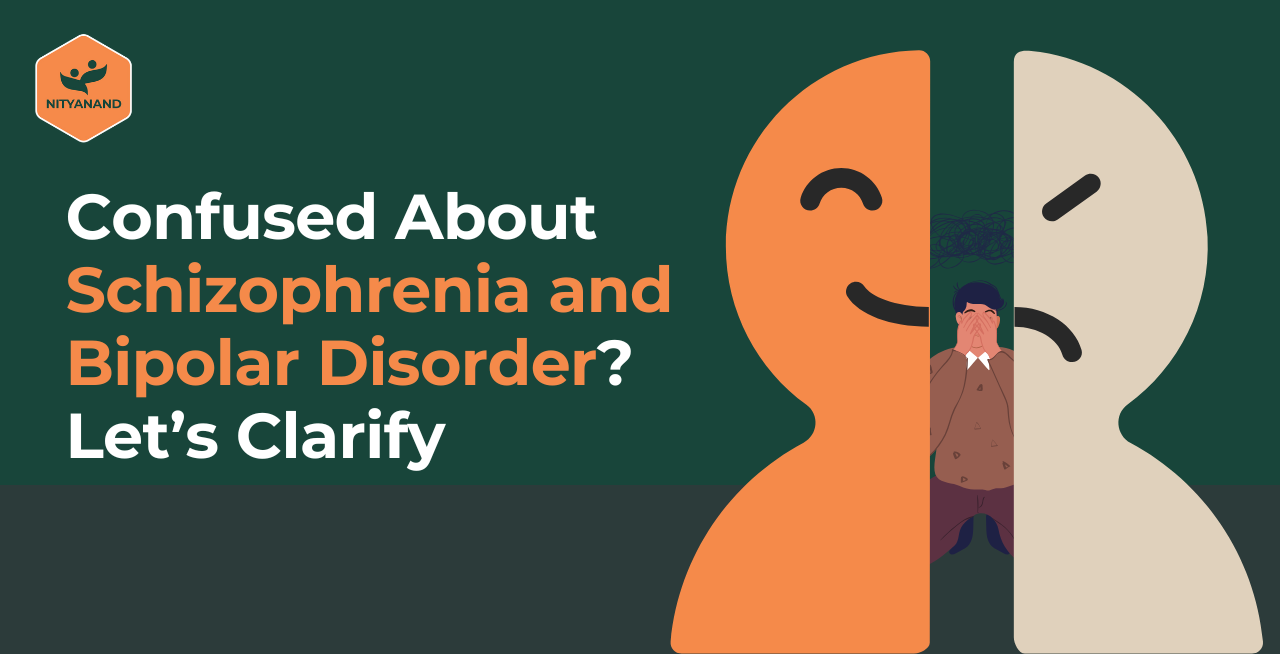
Families often feel confused and overwhelmed when a loved one begins showing extreme mood changes, unusual behaviour, or signs of losing touch with reality. Schizophrenia and bipolar disorder are two serious mental health conditions that are frequently mistaken for one another because some symptoms overlap. This confusion can delay proper diagnosis and treatment. Understanding the differences between these conditions is essential for timely care and long-term recovery.
This blog explains how schizophrenia and bipolar disorder differ in symptoms, severity, and treatment, helping families make informed decisions.
Schizophrenia is a chronic mental health condition that affects thinking, perception, emotions, and behaviour. A defining feature of schizophrenia is psychosis, which involves a loss of contact with reality. People with schizophrenia may hear voices, hold fixed false beliefs, or struggle with disorganised thinking.
Over time, schizophrenia can also reduce motivation, emotional expression, and social engagement. Many individuals experience difficulty maintaining daily routines without support. The condition usually begins in late adolescence or early adulthood. With consistent treatment, therapy, and family support, symptoms can be managed, and quality of life can improve.
Bipolar disorder is primarily a mood disorder characterised by shifts between manic and depressive episodes. During mania, individuals may feel extremely energetic, confident, or irritable. During depressive episodes, they may feel hopeless, tired, or emotionally withdrawn.
There are different forms of bipolar disorder, including Bipolar One and Bipolar Two, which vary in severity. Many individuals function well between episodes. Unlike schizophrenia, bipolar disorder is defined by changes in mood rather than a constant distortion of reality.
Although these conditions can look similar, their symptom patterns differ in important ways.
Common symptoms seen in schizophrenia include:
Common symptoms seen in bipolar disorder include:
The key difference is that psychosis in bipolar disorder is usually episodic, while in schizophrenia it is more persistent and not linked to mood changes.
Families often confuse manic behaviour with schizophrenia related psychosis.
Bipolar mania is typically marked by:
Schizophrenia is typically marked by:
Understanding these distinctions helps families seek an accurate diagnosis and appropriate treatment earlier.
Families often ask which is worse, bipolar or schizophrenia. There is no single answer. Severity depends on symptom intensity, frequency of relapse, response to treatment, and support systems. Schizophrenia may affect daily functioning more consistently, while bipolar disorder can cause severe disruptions during mood episodes. Both conditions are serious but manageable with timely care.
Both conditions involve genetic vulnerability, differences in brain chemistry, and environmental triggers such as stress or trauma. Substance use can worsen symptoms. While causes overlap, how symptoms develop and progress differ.
Diagnosis requires careful clinical evaluation over time. Specialists assess symptom patterns, duration, mood changes, and functional impact. Because symptoms overlap, misdiagnosis can occur without expert assessment. Early specialist involvement improves accuracy and outcomes.
Schizophrenia treatment often includes antipsychotic medication, psychosocial rehabilitation, and long-term support. Bipolar disorder treatment focuses on mood stabilisers, therapy, and lifestyle regulation. Family involvement plays a critical role in both conditions.
Families can support recovery by recognising early warning signs, encouraging treatment adherence, reducing stigma, and seeking professional guidance promptly. Education and structured support significantly improve outcomes.
Schizophrenia and bipolar disorder are different conditions that are often misunderstood. While symptoms may overlap, understanding their differences leads to better treatment decisions. With early diagnosis, consistent care, and family support, individuals with either condition can achieve stability and improved quality of life.
If you are unsure whether a loved one is experiencing schizophrenia or bipolar disorder, early professional guidance can make a meaningful difference. At Nityanand Rehab Centre, our mental health specialists provide careful assessment, accurate diagnosis, and compassionate treatment planning to support long-term stability and recovery. Book your appointment now!