In today's multifaceted world, the term "addiction" extends far beyond the commonly recognized realms of substances like alcohol, drugs, and tobacco. As the understanding of human psychology expands, we now recognize an array of addictions, from behaviors like gambling, shopping, and internet use to even more nuanced dependencies such as food, relationships, or work. These various forms of addiction, whether substance or behavior-based, share commonalities but also present unique challenges to the individual. Understanding the full spectrum of addiction is vital, not only for those struggling but also for those aiming to provide support.In this blog post, we will explore the different types of addiction and how they affect us in more detail. We will also discuss treatment options and recovery tips.
Addiction is a complex condition that is often misunderstood. It is not simply a matter of weakness or lack of willpower. Addiction is a chronic brain disease that changes the way a person thinks, feels, and behaves. Addiction is characterized by a compulsive need to use a substance or engage in a behavior, even though it has negative consequences. People with addiction may experience cravings, loss of control, and continued use despite negative consequences. Addiction can be caused by a combination of factors, including genetics, biology, environment, and personal experiences. There is no single cause of addiction, and it can affect anyone, regardless of age, gender, race, or socioeconomic status.
Yes, addiction is considered a disease. It affects both the brain's structure and its function. Over time, repeated experiences with substance use or certain behaviors cause changes in the brain that can lead to tolerance, dependence, and the urge to consume the substance or indulge in the behavior even in the face of negative consequences. This isn't about being weak-willed; it's about the brain getting "rewired." So, while starting might be a choice, once addiction sets in, it acts more like a disease, making it tough for individuals to just "stop" on their own. What are the signs of addiction? The signs of addiction can vary based on the substance or behavior but often include:
Addiction is a multifaceted issue with numerous potential triggers. Though each individual's journey into addiction is unique, many factors can increase vulnerability:
Understanding these triggers can help in creating effective prevention strategies and targeted interventions. It's essential to approach addiction with empathy and a comprehensive view, recognizing that a combination of factors, rather than a single cause, often drives it.
Understanding that one size doesn't fit all is vital. Individualized treatment plans, recognizing a person's unique needs, circumstances, and preferences, often yield the best results in the journey to recovery.
Prevention is always better than cure. While genetic factors can make one susceptible, environmental factors can often be controlled:
Addiction wears many faces, extending beyond the commonly understood substance dependencies to encompass behaviors like gambling, eating, and even internet use. Each type affects not only the individual but also their families, relationships, workplaces, and communities at large. Recognizing and understanding the nuances of different addictions are paramount in addressing and navigating the challenges they present. At Nityanand Rehab Center, we are dedicated to shedding light on these complexities, providing holistic care tailored to individual needs, and forging pathways to recovery. Because every person deserves a chance to reclaim their life from the grips of addiction.
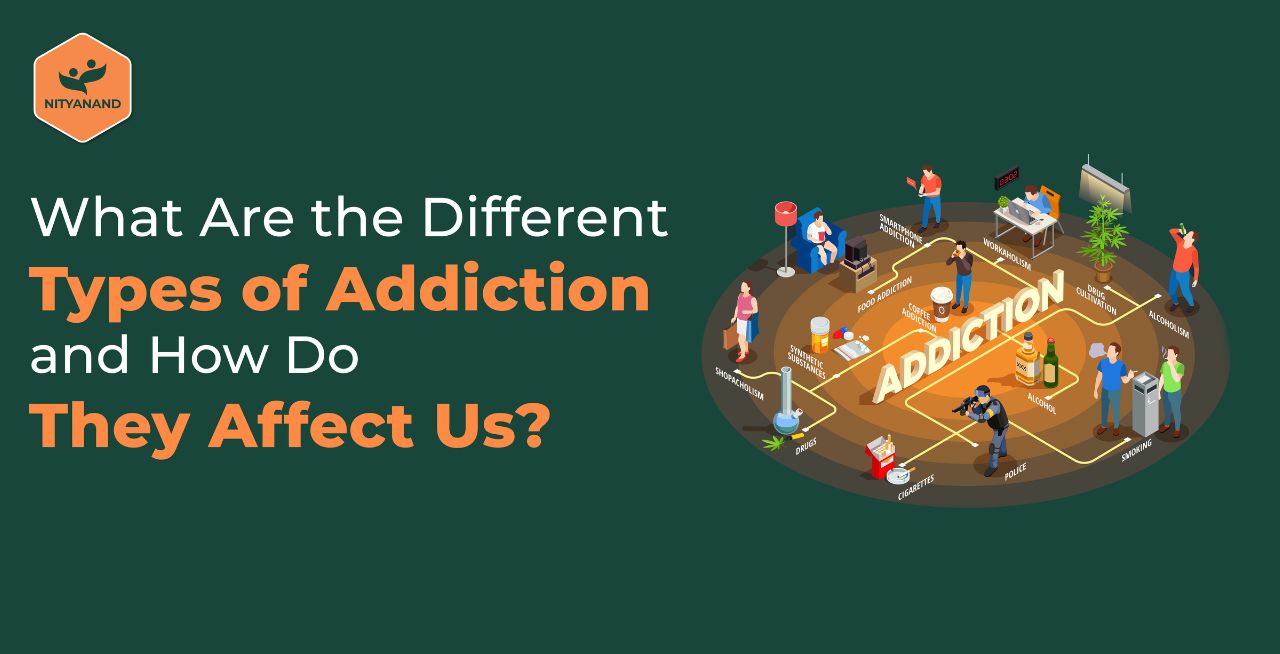
The most common types of addiction include substance addictions like alcohol, drugs, nicotine, prescription medications, and behavioral addictions like gambling, gaming, internet, food, pornography, shopping, sex, and work addiction.
Yes. Behavioral addictions can affect brain reward pathways in the same way substances do. They can lead to financial loss, relationship breakdown, emotional distress, and impaired daily functioning.
Addiction is classified as a chronic brain disease. While the decision to begin using a substance or behavior may be voluntary, addiction involves changes in brain chemistry that make quitting extremely difficult without help.
Early indicators include increased tolerance, cravings, withdrawal symptoms, loss of interest in daily activities, secrecy, financial problems, and continued use despite negative consequences.
Addiction can be triggered by factors such as genetics, trauma, environment, stress, peer pressure, mental health disorders, and early exposure to substances or addictive behaviors.
Addiction can lead to anxiety, depression, memory loss, liver or heart damage, weakened immune system, cognitive decline, relationship issues, and reduced academic or professional performance.
The best treatment depends on the individual and may include detox, medications, psychotherapy, CBT, group therapy, family therapy, residential rehab, and long-term relapse prevention.
Prevention is possible through early education, building emotional resilience, avoiding high-risk environments, seeking help for mental health issues, and developing healthy coping skills.
Rehab should be considered when addiction interferes with daily life, relationships, work, school, or health — or when a person is unable to stop using on their own.